.png)
2026-04-21
Each year, Cleantech Lithuania presents its annual sector review. This year, we begin our analysis with the indicators that best reflect the sector’s maturity and real economic weight: jobs and wages. These are the metrics that show whether the sector is growing, what kind of value its jobs create, and how strongly it competes for talent.
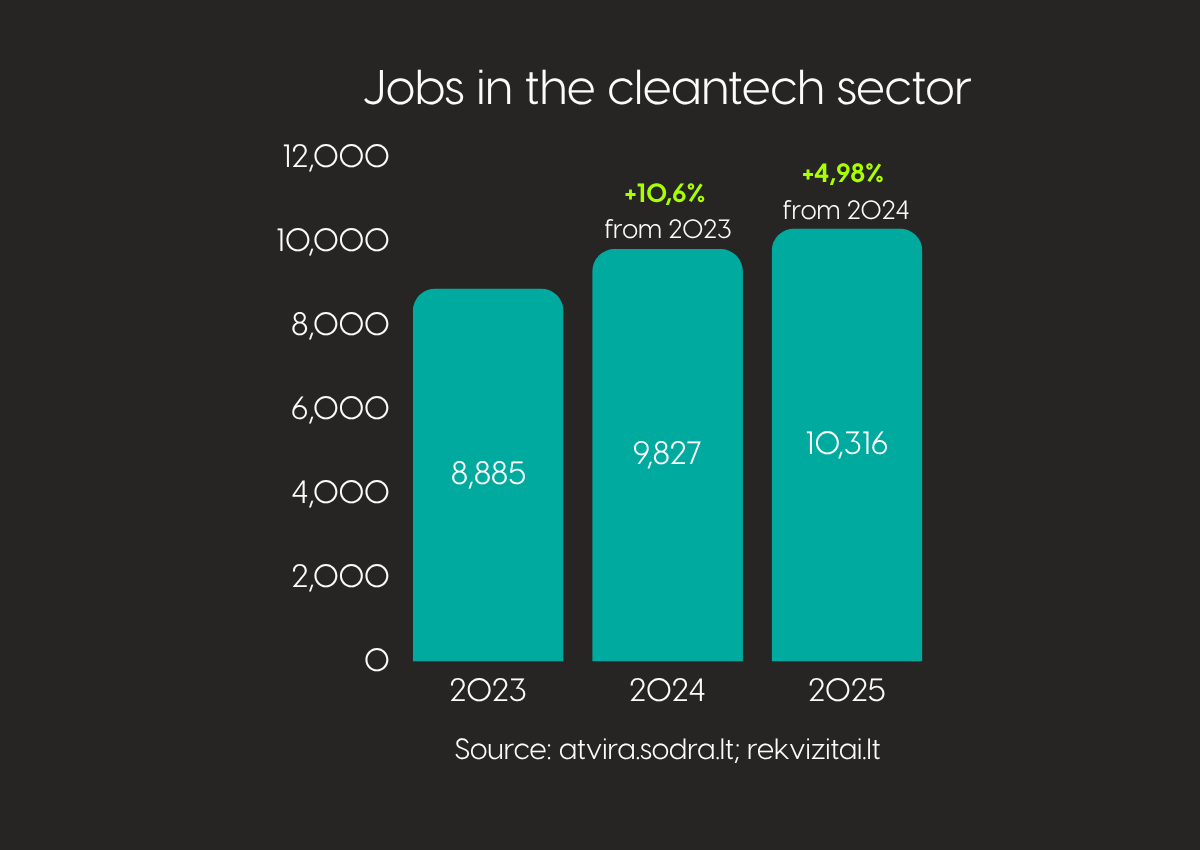
The 2025 data points to a clear direction: Lithuania’s cleantech sector continues to grow, has surpassed the 10,000-jobs mark, and is becoming an increasingly important part of the high-value economy. In 2023, the sector employed 8,885 people; in 2024, 9,827; and in 2025, already 10,316. This means that 1,431 additional jobs were created over two years. Employment grew by 10.6% in 2024 and by a further 4.98% in 2025. The sector is therefore not only expanding, but also demonstrating a steady ability to create new jobs. At the same time, another important trend is becoming visible: the pace of growth slowed in 2025 compared with 2024. This is not a sign of weakening, but rather a signal that part of the market is moving from a phase of faster expansion into a more mature phase of growth.
It is also important to note that Lithuania’s cleantech growth today is being shaped by companies at different stages of maturity. Early-stage teams are developing new technologies, identifying market niches, and testing new business models. More mature companies bring scale, continuity, and greater weight in the labour market. Together, they create an environment in which innovation can turn into real economic value more quickly. This is one of the clearest signs that cleantech in Lithuania is already developing as a mature and diverse ecosystem.
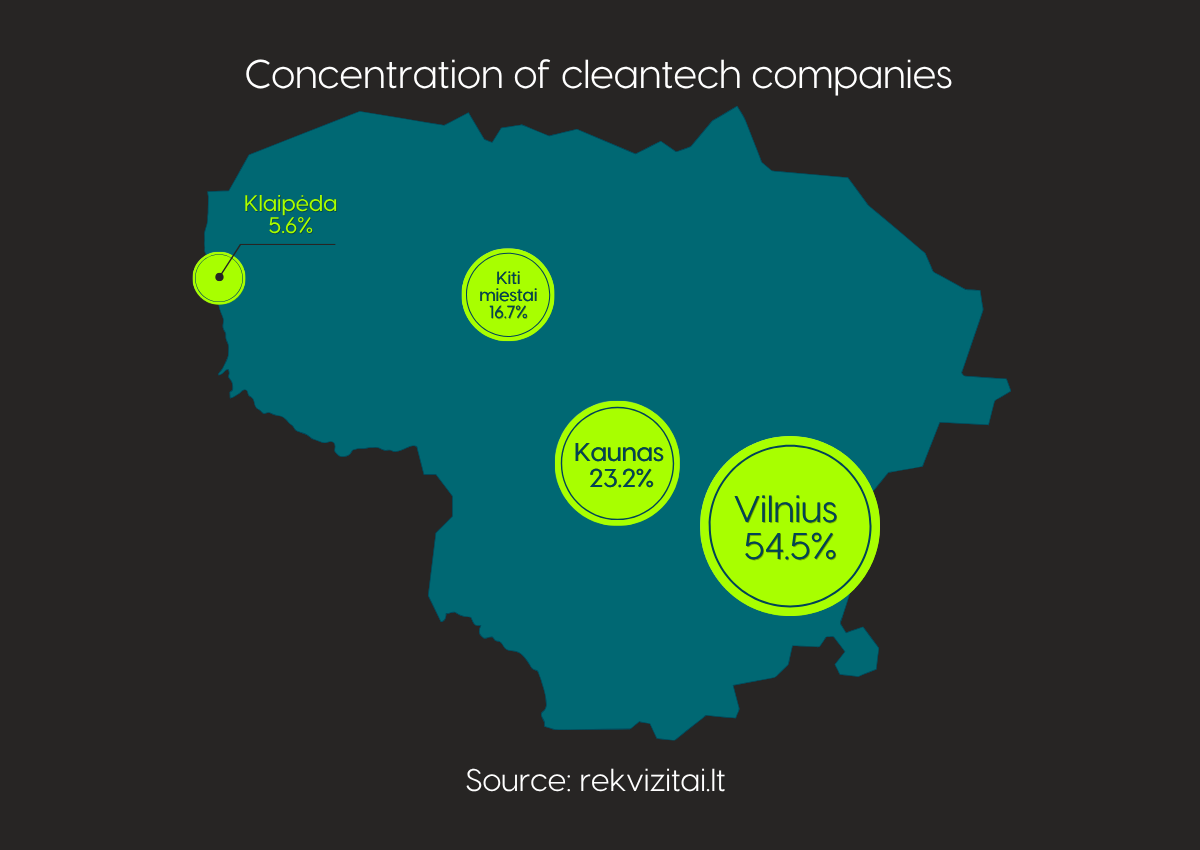
By registration location, Lithuanian cleantech companies continue to concentrate in the largest cities. The data shows that 54.5% of the cleantech companies included in this analysis are registered in Vilnius, 23.2% in Kaunas, 5.6% in Klaipėda, and the remaining 16.7% in other cities. This means that more than three quarters of the sector’s companies are concentrated in the two main hubs, Vilnius and Kaunas.
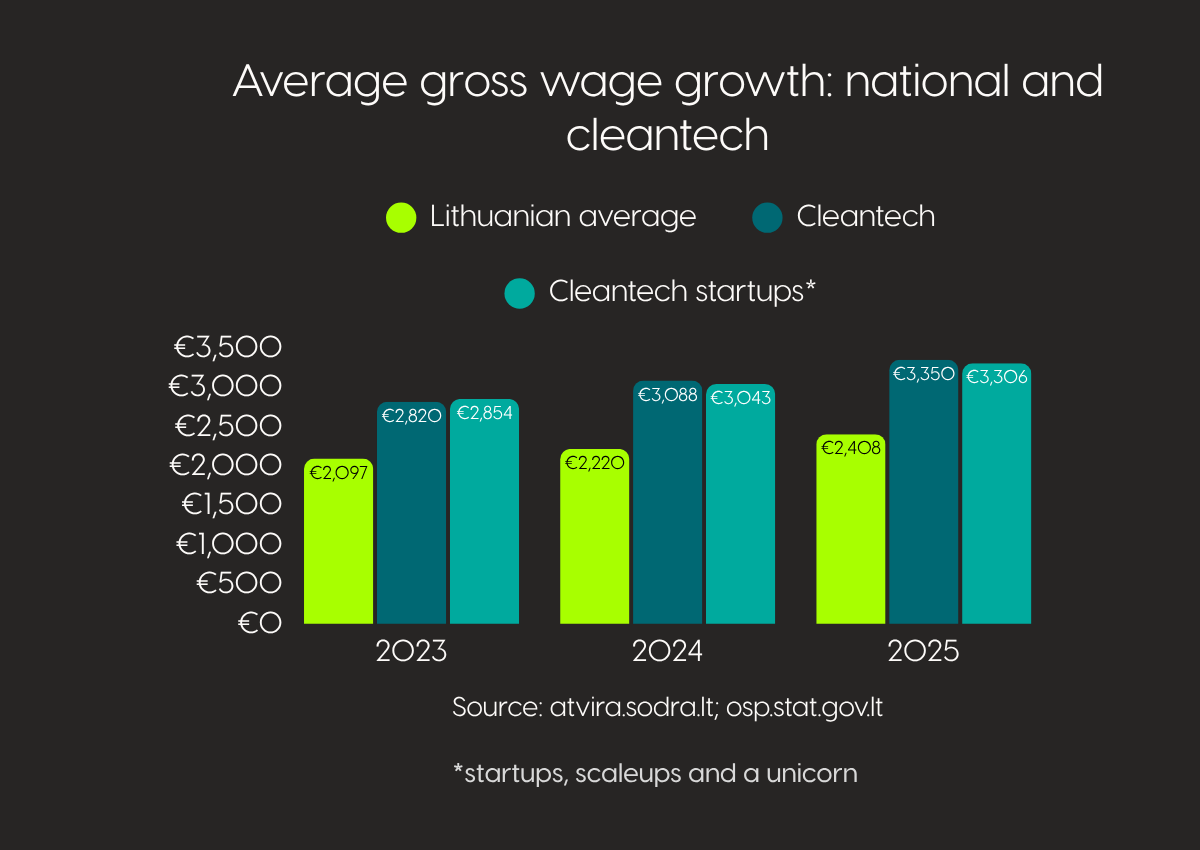
Wage dynamics are equally important. Average wages across the cleantech sector grew steadily between 2023 and 2025, while the sector as a whole remained clearly above the national average throughout the entire period. Over these three years, the average gross wage in the cleantech sector was around 39–40% higher than the overall Lithuanian average, reaching €3,349.93 in 2025. This trend points to a concentration of high-value jobs and a growing need for specialised skills.
A high wage level is also maintained in the most dynamic part of the ecosystem – the segment of cleantech startups, scaleups, and the unicorn. In this segment, the average gross wage in 2023–2025 was around 37–42% higher than the national average. This shows that even younger and fast-growing cleantech companies in Lithuania are already competing for talent in terms of pay.
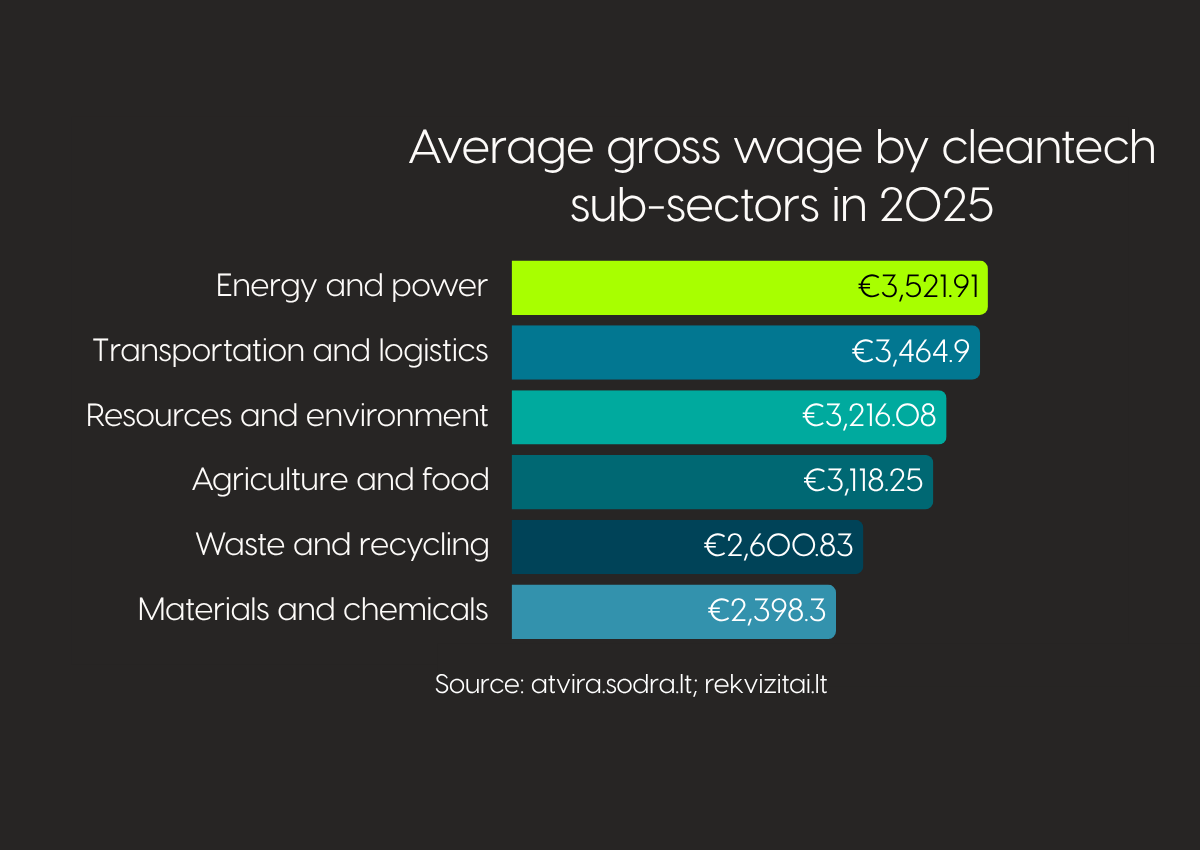
At the same time, a single sector-wide average hides quite different realities. The highest average wage in 2025 was recorded in the sustainable energy segment, where it reached €3,521.91. A high level was also maintained in transportation and logistics, where the average gross wage stood at €3,464.90. Meanwhile, wage levels were more moderate in the resources and environment as well as agriculture and food segments, and the lowest remained in materials and chemicals and in waste and recycling. This shows that the highest-paying roles today are concentrated in areas with the greatest technological complexity, infrastructure scale, and capital intensity.
The first 2025 data points provide a fairly clear view of the overall direction: Lithuania’s cleantech sector is growing, creating more jobs, offering wage levels that significantly exceed the national average, and increasingly concentrating in high-value-added activities. This points to a maturing ecosystem in which innovation is more and more often turning into real economic value, while the sector’s weight in the Lithuanian economy continues to grow.