2026-07-20
Lithuanian marine biotechnology startup Inobiostar, founded by researchers at Klaipeda University, has completed another phase of field testing for its innovative oil spill remediation technology, InnoAerogel®, in Athens. The trials were carried out in collaboration with the Agricultural University of Athens (AUA) through the EU-CONEXUS European University alliance, of which Klaipeda University is a member and Inobiostar is an active innovation partner.
The testing marks an important milestone in the company's validation programme, following successful evaluations in France and ongoing trials in Finland. As Inobiostar moves closer to commercialisation, the results will help demonstrate the technology's performance across different marine environments and support its wider adoption for sustainable oil spill response.
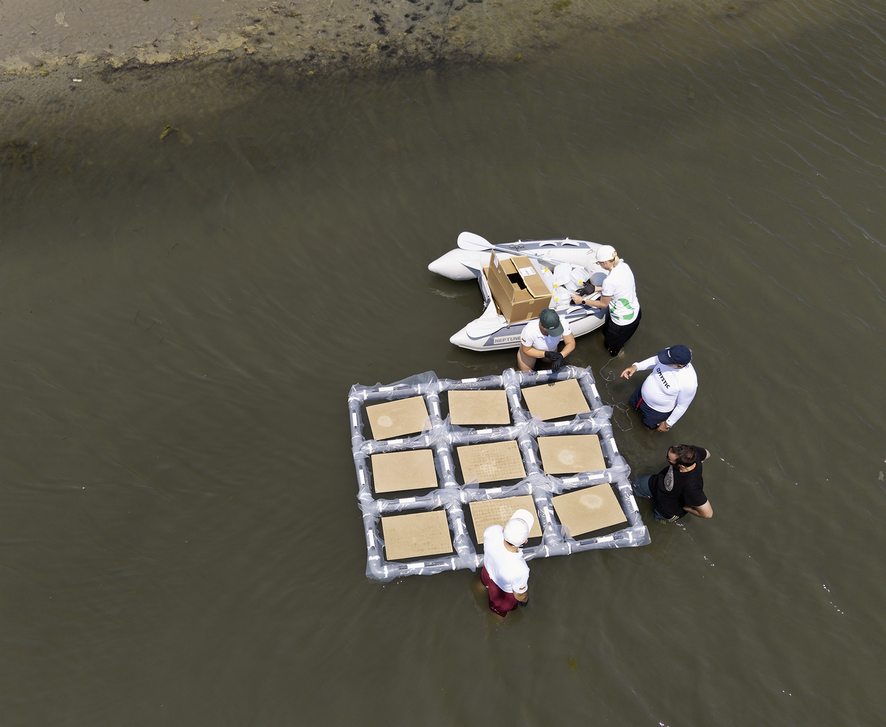
Originally developed to address environmental challenges in the Baltic Sea, InnoAerogel® is a biodegradable sorbent made from recycled paper waste and immobilised oil-degrading microorganisms isolated from the Baltic Sea. Designed to clean oil-contaminated water ecosystems, the technology offers a sustainable alternative to conventional sorbents while demonstrating approximately twice the efficiency of comparable fossil fuel based products currently on the market.
The field trials in Athens marked an important step in assessing the technology's potential beyond the Baltic Sea. Researchers evaluated the stability of the immobilised microorganisms under Mediterranean marine conditions, including higher salinity and warmer temperatures, while also assessing the product's behaviour on the water surface under real environmental conditions.
According to Dr Tatjana Paulauskienė, CEO & Founder of Inobiostar and co-inventor of InnoAerogel®, testing the technology in different marine environments is an essential step towards demonstrating its real-world potential and preparing it for wider application.
"Our technology was created in response to environmental challenges in the Baltic Sea, but marine pollution knows no borders. Testing in different marine environments is an essential part of the innovation journey. The trials in Athens allowed us to evaluate not only how the microorganisms adapt to different conditions, but also how the product performs in real-life settings. The fieldwork has now been completed, and the analytical phase will continue in the laboratories of the Agricultural University of Athens."
The Athens trials are part of Inobiostar's growing international testing programme. Earlier this year, CEDRE International in France confirmed that InnoAerogel® demonstrated approximately twice the efficiency of comparable products currently available on the market and included it in its catalogue of recommended products. The technology is also being tested at South-Eastern Finland University of Applied Sciences, further expanding the evidence of its performance across different marine environments.

For Inobiostar, international testing is another milestone towards bringing science-based environmental technologies to market. The company's long-term ambition is to become an innovation hub developing sustainable solutions for global environmental challenges, contributing to cleaner seas and coastlines while strengthening European competitiveness and strategic autonomy in environmental technologies.
"We want our innovations to create lasting value for society and the environment," says Dr Tatjana Paulauskienė. "Science-based innovation is never a short journey—it requires persistence, collaboration and belief in your ideas. But by working together across borders, we can develop solutions that make a real difference for marine ecosystems and inspire the next generation of researchers and innovators."

Beyond supporting the testing in Athens, EU-CONEXUS has opened new opportunities for Inobiostar to grow through international collaboration. The company contributes to the EU-CONEXUS Joint Master's Programme in Marine Biotechnology, supervising student research projects together with Klaipeda University. Students from different countries have already contributed to the development of InnoAerogel®, gaining hands-on experience in turning research into innovation. This year, Inobiostar also signed a Letter of Support for the programme's Erasmus Mundus application.
According to Dr Tatjana Paulauskienė, these collaborations create value for both startups and academia.
"EU-CONEXUS has enabled us to connect with researchers, universities and talented students across Europe. For research-based startups, these partnerships provide opportunities to validate innovations internationally, exchange knowledge and bring scientific ideas closer to real-world application."




.png)